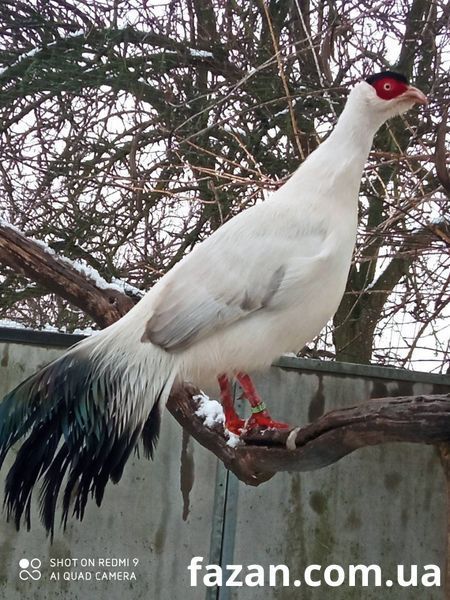
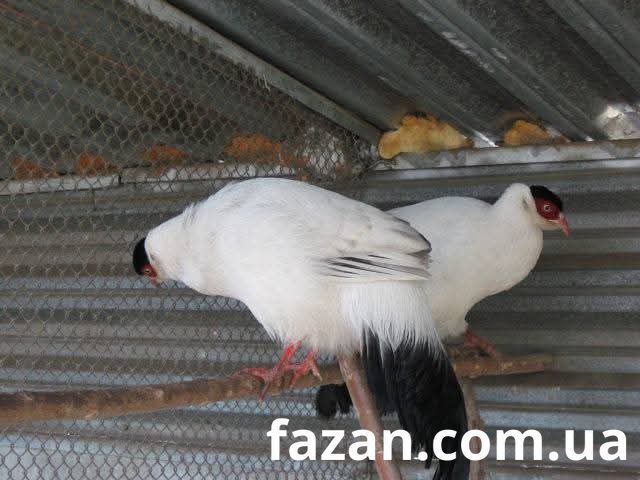
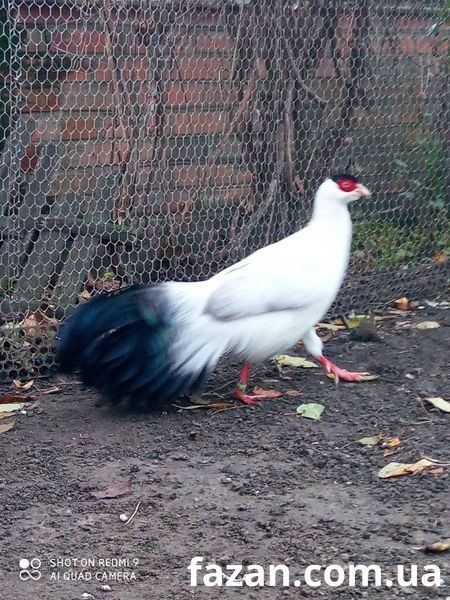
The White Eared Pheasant is a ground-dwelling member of the pheasant family, measuring 86–96 cm in total length. Its plumage is predominantly white, sometimes with light gray on the chest, back, and wings. The head features a black “cap,” while the tail is dark gray-green, appearing black from a distance. Legs are reddish-pink, and the bare skin around the eyes is deep red. Juveniles are brownish-gray and gradually develop adult coloration. Calls consist of distant, hoarse, creaking sounds.
Distribution and Habitat
Endemic to southwestern China, including the eastern Tibetan border and nearby mountain ranges in northern Yunnan, western Sichuan, and southeastern Qinghai. Prefers upper montane coniferous and mixed forests, subalpine birch, and rhododendron thickets at elevations of 3000–4300 m. Local abundance depends on water availability, feeding sites, and predator pressure; in winter, flocks can reach up to ~30 birds.
Diet
Feeds mainly on the ground, picking plant material and digging up bulbs. Diet includes seeds, green plant parts, fruits, rhizomes, and seasonally available invertebrates.
Reproduction
Monogamous during the breeding season. Nesting is adapted to high-altitude habitats, with egg-laying, incubation, and chick rearing suited to the cold mountainous climate.
Subspecies
C. c. crossoptilon – nominal subspecies, southeastern Tibet
C. c. dolani – southeastern Qinghai
C. c. drouynii – eastern Tibet
C. c. lichiangense – northern Yunnan and southwestern Sichuan
Conservation
Threats include hunting and habitat loss. High-altitude forests are currently relatively intact, though tourism development may increase fragmentation. Listed in Appendix I of CITES. Some populations benefit from Buddhist cultural protection and occurrence in protected areas. Natural predators include crows and hawks.