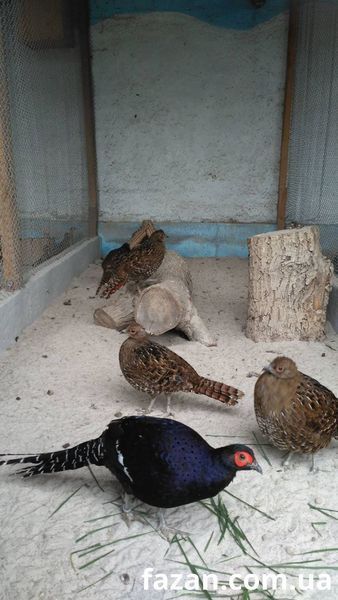
Mikado Pheasant is a rare member of the pheasant family, endemic to the mountainous regions of Taiwan and regarded as a symbolic species for the country. Males have striking purple plumage with a metallic bluish sheen, with black spots on the chest and throat showing a steel-blue tint. The long tail is dark brown with broad white bars, and the undertail coverts are black with pale tips. The beak is two-toned: upper mandible black with a yellowish tip, lower mandible yellow. Legs are dark gray.
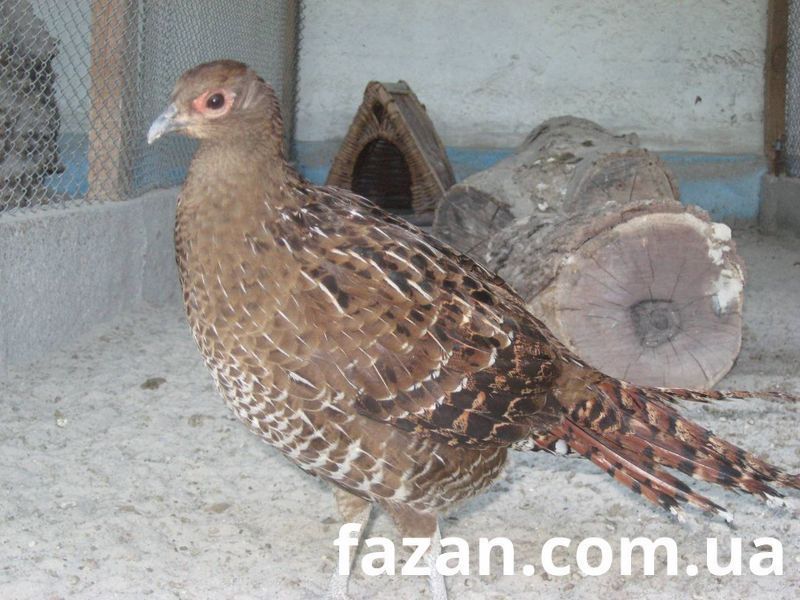
Female
Females are smaller and more subdued in color, reaching up to 53 cm in length. Their plumage combines olive-brown and reddish-brown tones, wings have dark spots, and tail feathers display light crossbars. The chin and throat are yellowish-white, and the breast is olive-gray.
Habitat
This pheasant inhabits the mountainous areas of Taiwan at elevations from 1800 to 3300 m. It prefers mixed coniferous and broadleaf forests, forest edges, and is especially found near Yushan National Park.
Reproduction
The breeding season runs from March to June. Females lay small clutches of 3–8 eggs. Specimens of this rare species’ eggs are preserved in museum collections for research purposes.
Status and Conservation
According to the IUCN, the Mikado Pheasant is listed as Near Threatened. Major threats include habitat loss due to landslides and road construction. This pheasant, together with the Yushan mountain landscape, is featured on Taiwan’s 1000-dollar banknote.