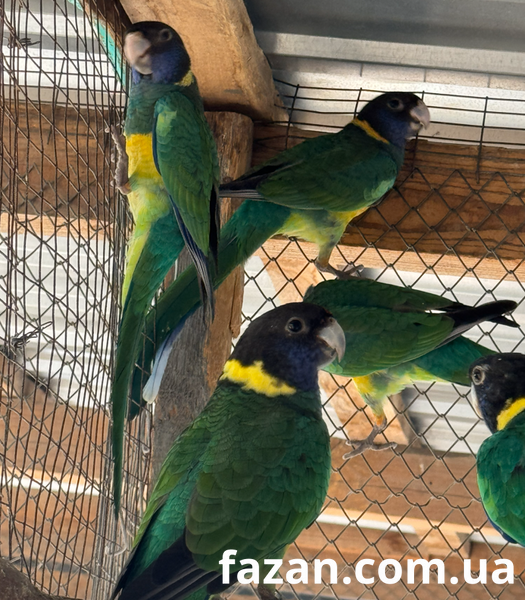
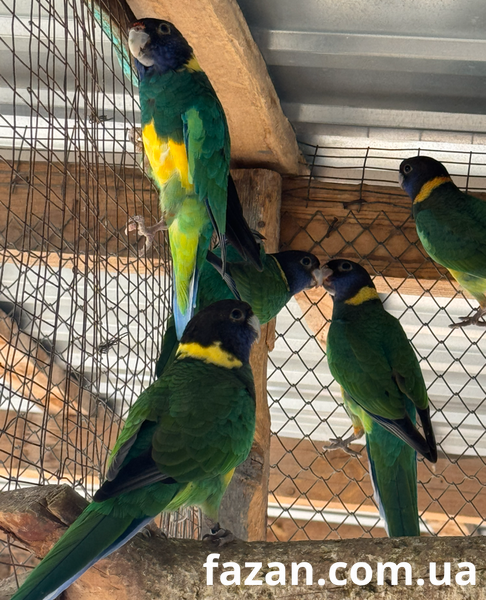
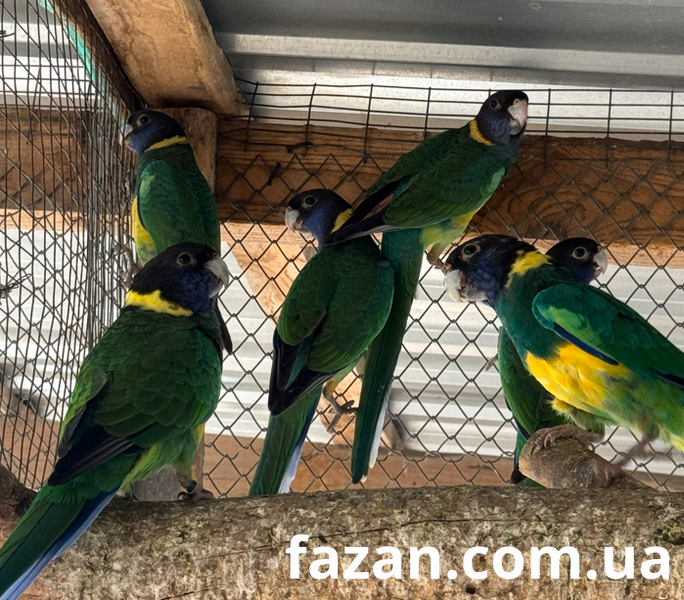
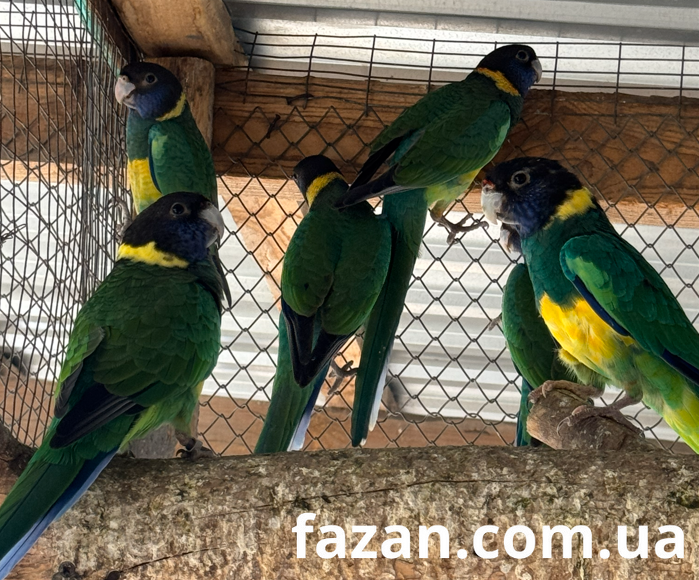
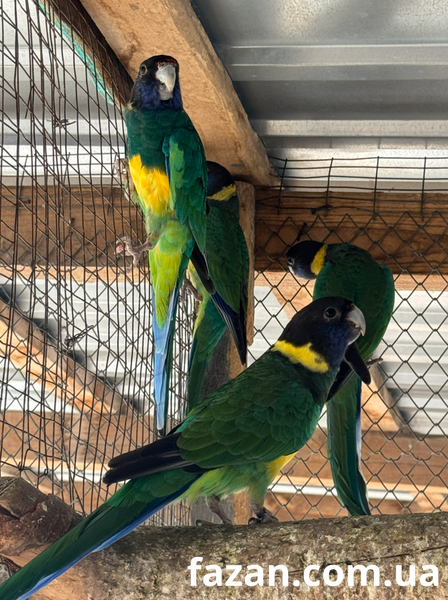
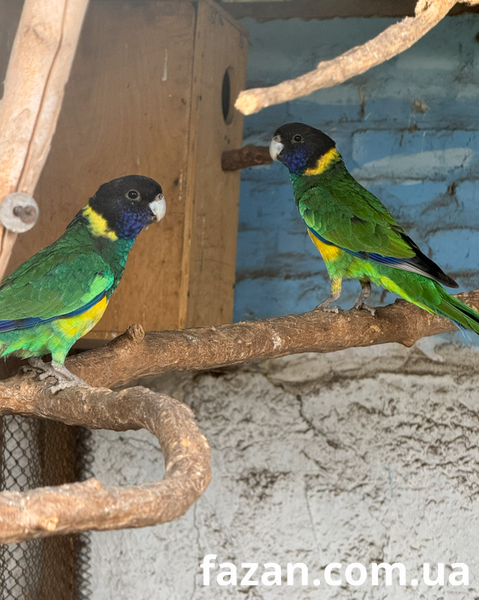
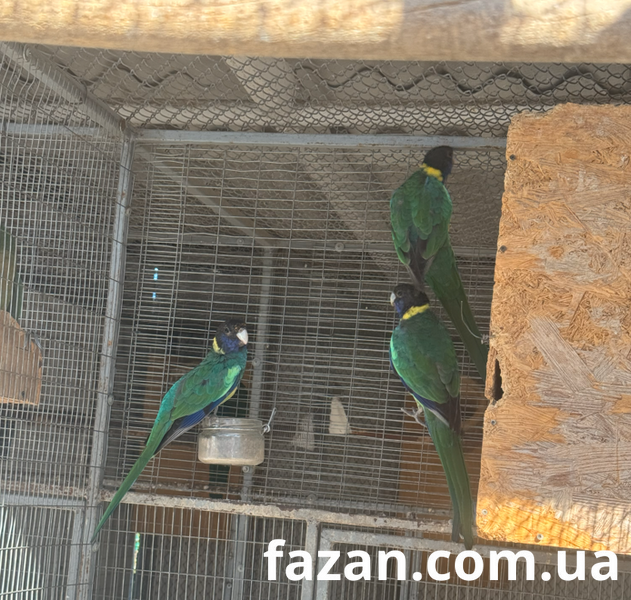
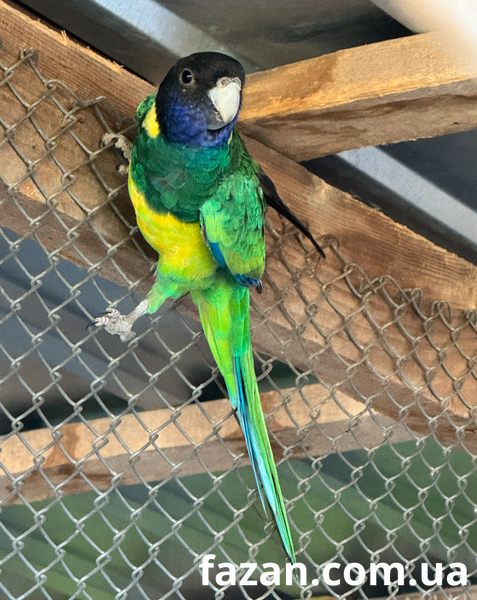
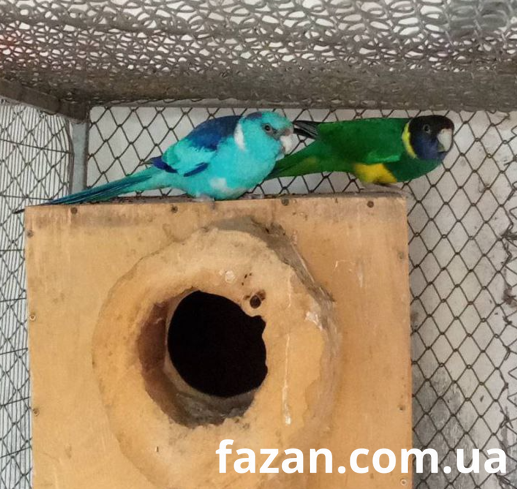
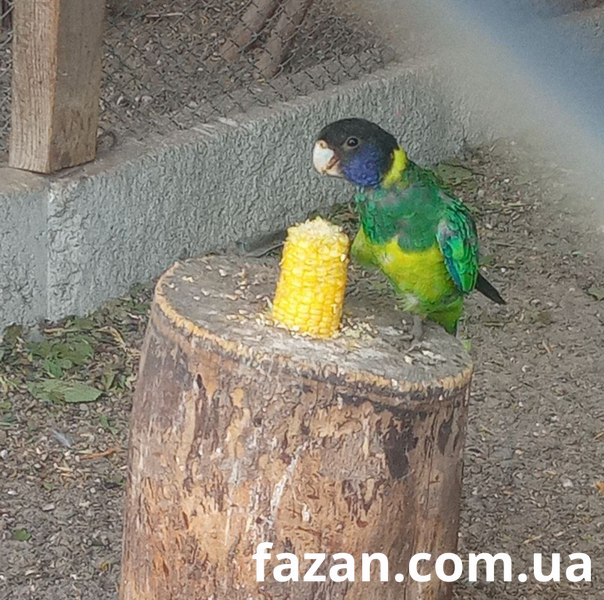
The collared parrot - a slender Australian parrot about 37-38 cm long. The main plumage is green, the head is black with a slight gloss, and the cheeks are bluish. Some birds have a narrow red stripe on the forehead and a yellowish mark on the nape. The lower back is blue-green, wings are yellowish-green. Throat and chest are bluish-green, belly is yellow. Legs are grey. Females are paler than males.
Range and Habitat
Found in southern, central, and western regions of Australia. Inhabits a variety of open landscapes with trees, including eucalyptus groves along waterways, parks and gardens, agricultural land, and forest edges.
Diet and Lifestyle
Feeds on seeds, fruits, berries, nuts, flowers, and buds, as well as insects and their larvae. In the southwestern range, more often feeds in the tree canopy than on the ground. May cause damage to fruit plantations, particularly pears and apples.
Breeding
Breeding season depends on the region. In the south, typically from August to December. On the mainland, the start of breeding is largely determined by rainfall. Nests in tree hollows, preferring eucalyptus trees near rivers and water bodies. Clutch contains 4-7 eggs, incubated by the female. Incubation lasts about 20-22 days.
Taxonomy and Subspecies
Described by George Shaw in 1805. Previously some authors placed it in the genus Platycercus (rosellas). Subspecies differ noticeably in coloration: B. z. zonarius and B. z. semitorquatus have a black head, bright green back, tail, and wings, bluish-green throat and chest; B. z. zonarius has a yellow belly, B. z. semitorquatus a green one. Two other subspecies have a bright green “crown” and blue-green cheeks; B. z. macgillivrayi is dominated by light green tones.