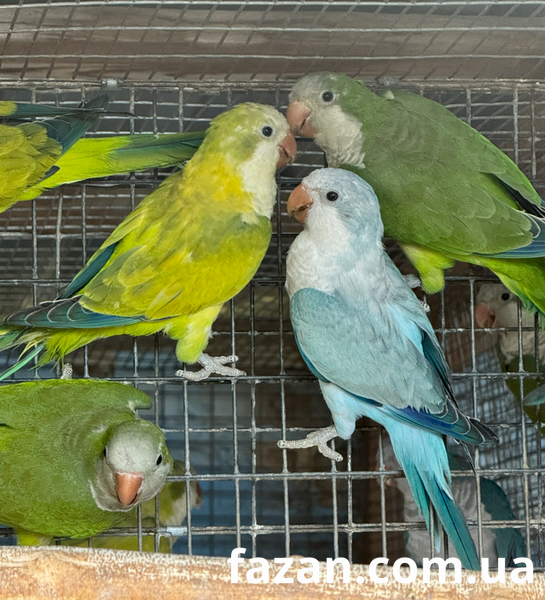
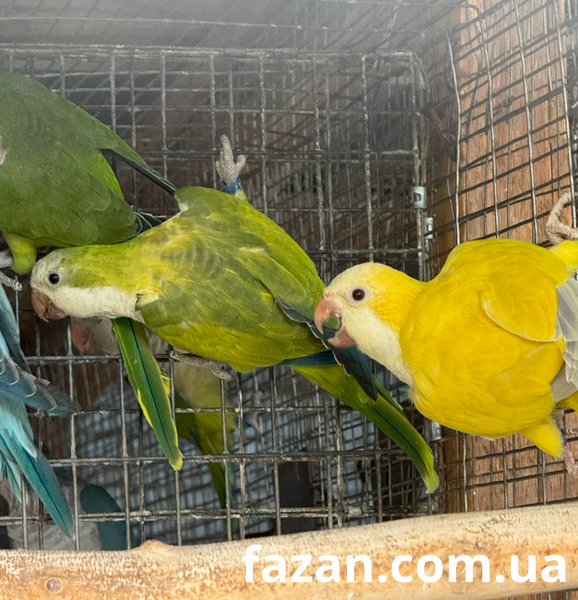
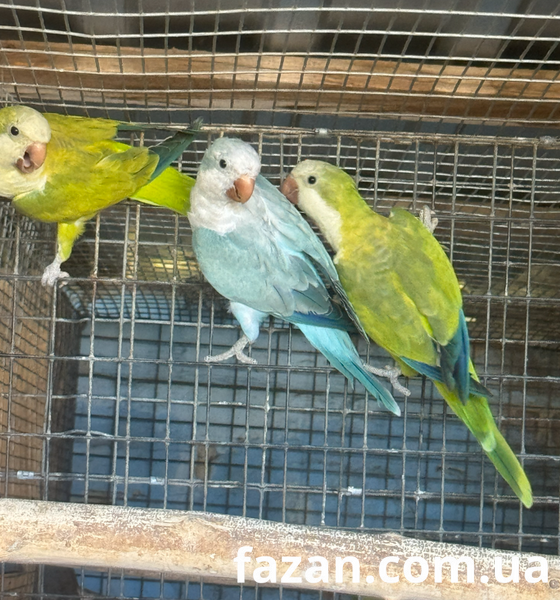
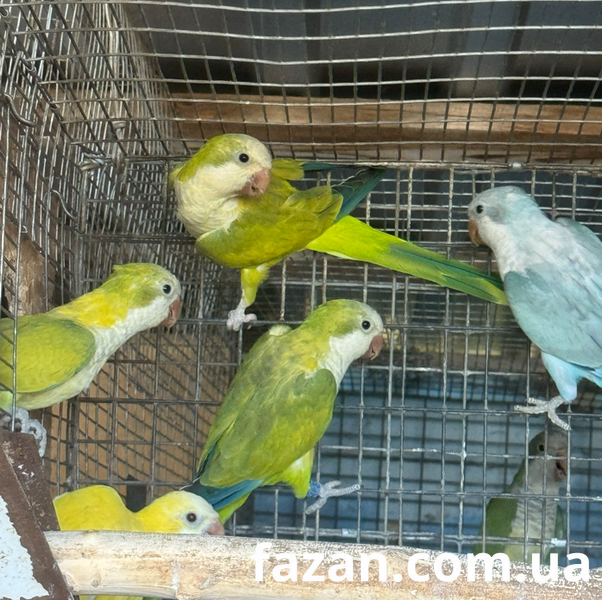
Monk Parakeet (Myiopsitta monachus)
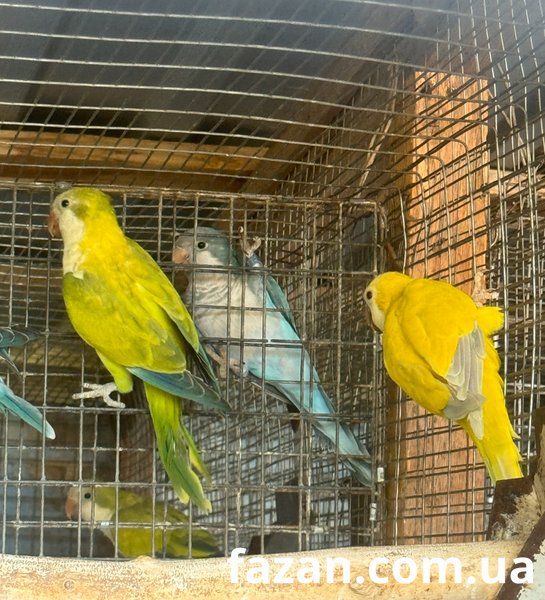
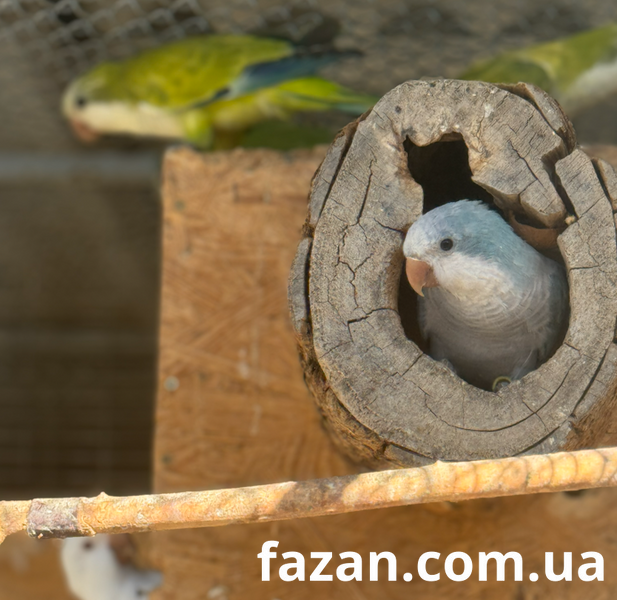
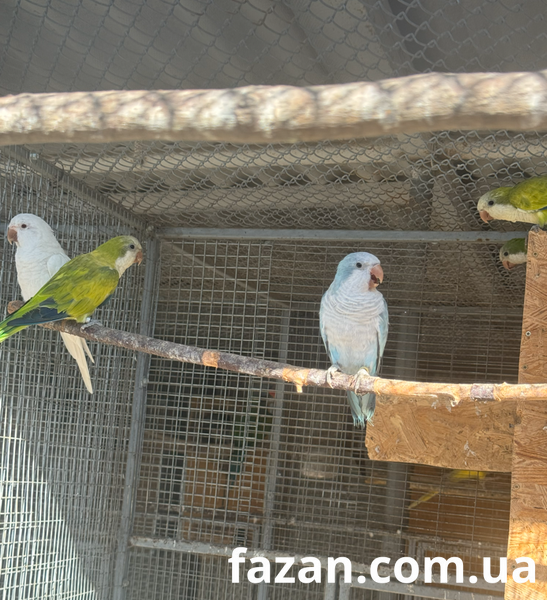
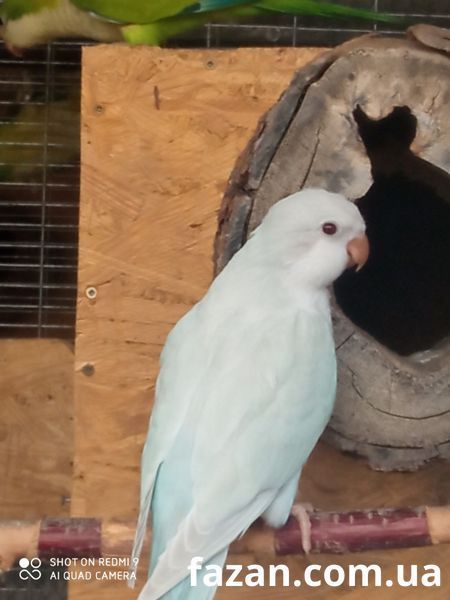
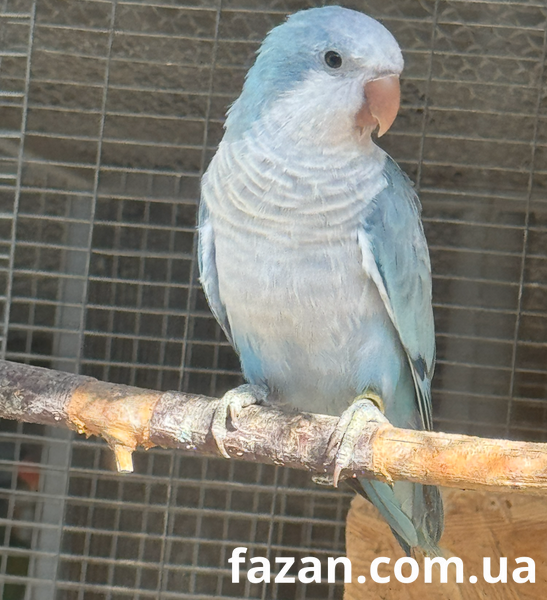
Monk Parakeet - a social South American species measuring 27-30 cm in length and weighing around 100 g. The main plumage is green; the chest is pale green-gray with transverse green streaks, the lower neck and front of the head are gray. Wings are dark brown with blue flight feathers, and the undertail coverts are yellowish-green. The beak is strong, straw-colored, and strongly curved; the iris is brown. The tail is stepped and longer than the wing. Sexual dimorphism is slight, with females slightly smaller than males. The bird belongs to the parrots category.
Range and Habitat
The natural range covers Paraguay, northern Argentina, Uruguay, and southern Brazil. The species has been successfully introduced to the USA and Europe, where it forms urban populations (parks, boulevards, power line poles). In the wild, it inhabits grasslands and woodland habitats, often on slopes up to ~1000 m above sea level.
Lifestyle and Interaction with Humans
They stay in flocks of 200-500 individuals. They adapt well to anthropogenic landscapes and can damage grain crops and fruit plantations. In some European cities, they are considered invasive, with population control measures in place. Communal nests on poles and tree canopies can sometimes reach substantial mass, which is taken into account in urban green space management.
Breeding
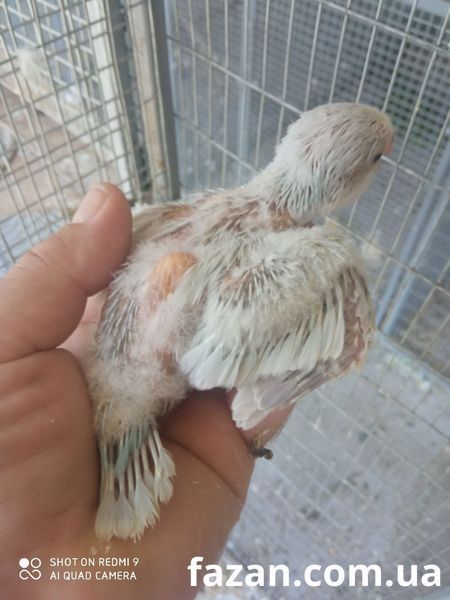
Unique among parrots, Monk Parakeets regularly build enclosed twig nests on tree branches and artificial structures. Colonial spherical "settlements" have multiple entrances and chambers and are reused multiple times. Clutches usually contain 5-8 white eggs; incubation lasts 22-26 days. Chicks fledge at 6-7 weeks. Under favorable conditions, two clutches per season are possible.
Quaker Parrot Habitat