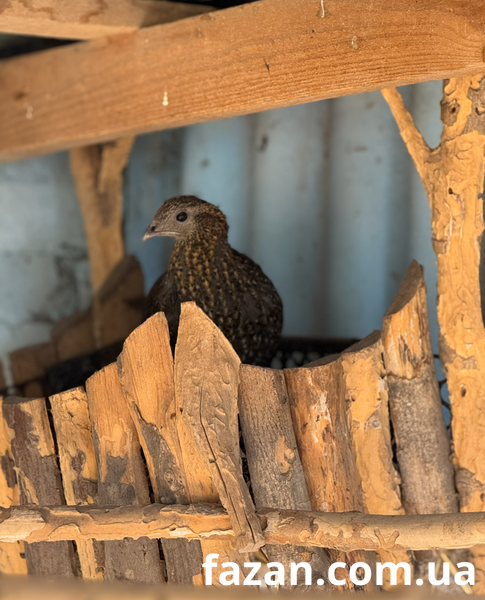
Temminck's Tragopan is a striking member of the pheasant family found in the mountainous regions of South Asia. Named after the Dutch zoologist Conrad Jacob Temminck, this high-altitude species prefers dense forests and bamboo and rhododendron thickets.
Size and Appearance
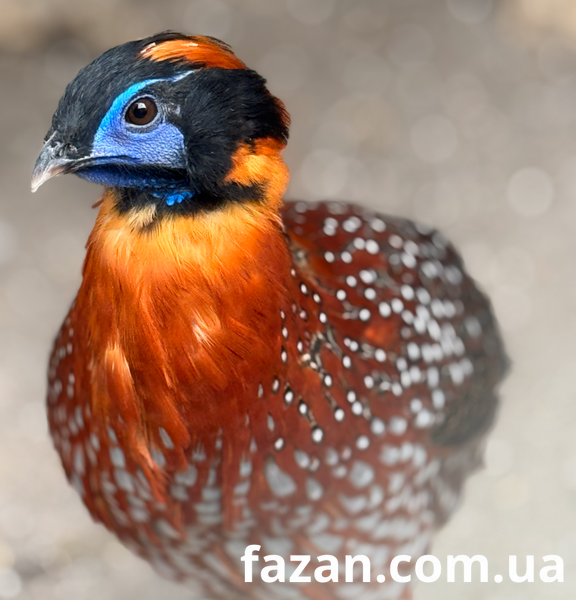
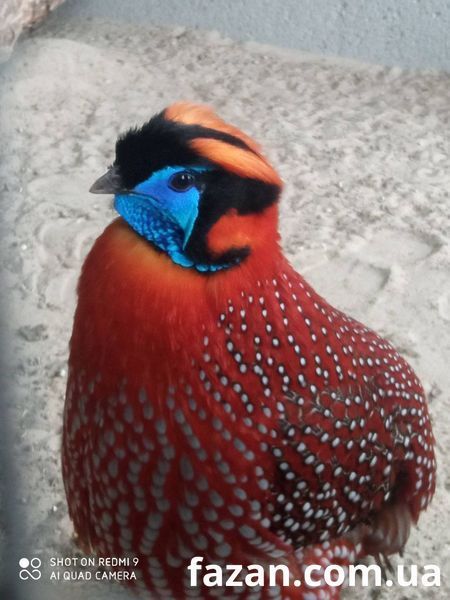
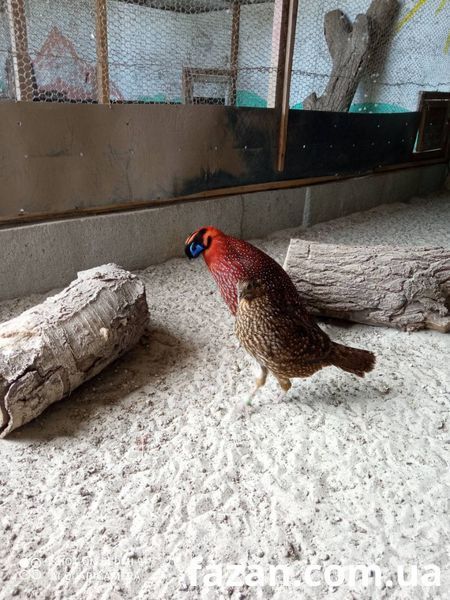
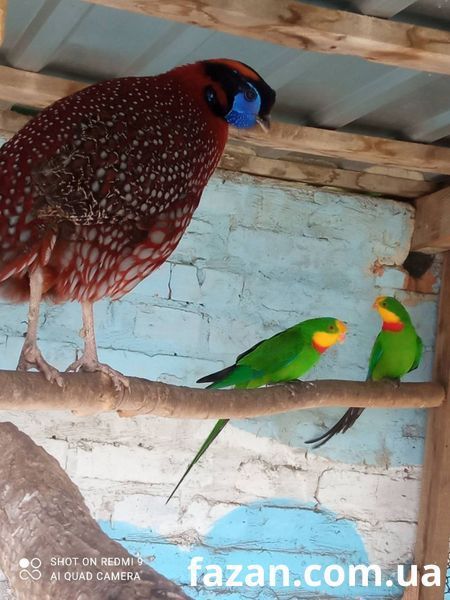
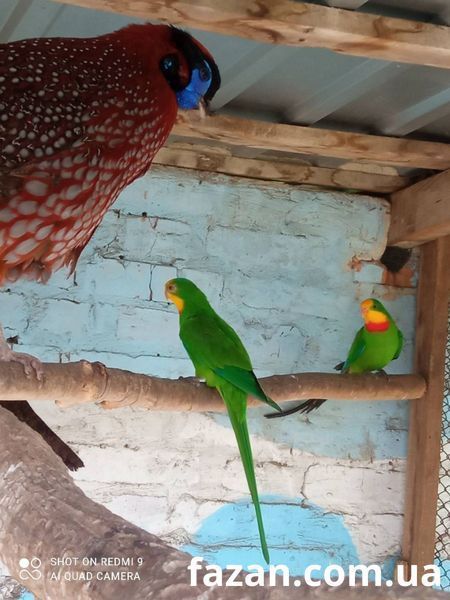
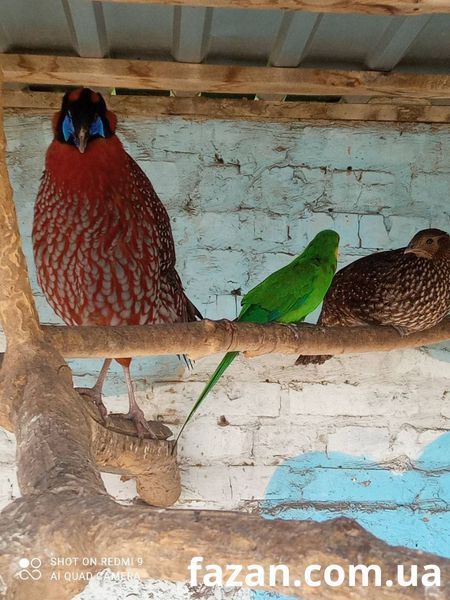
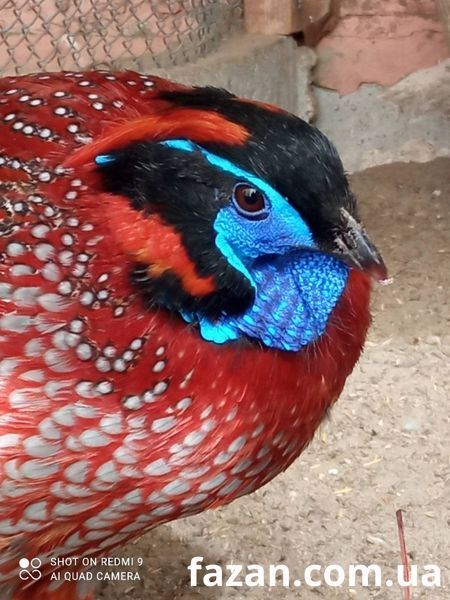
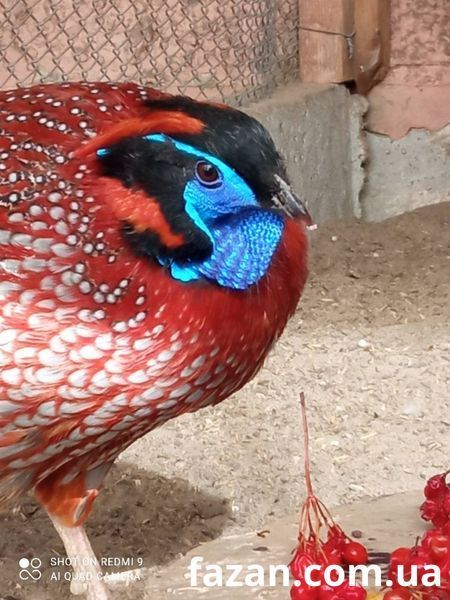
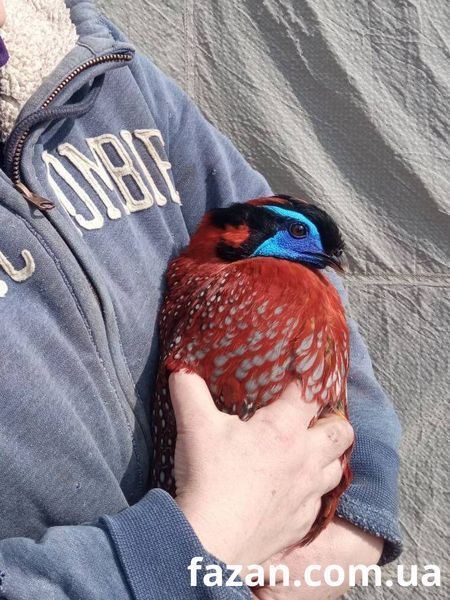
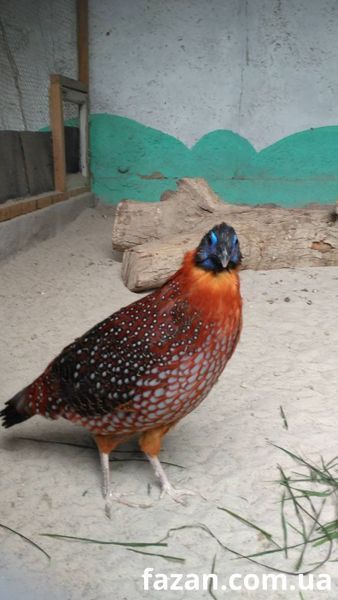
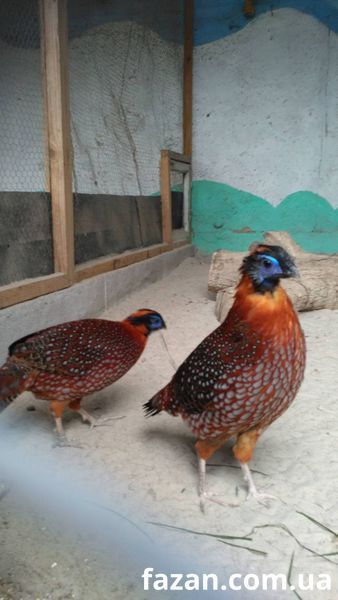
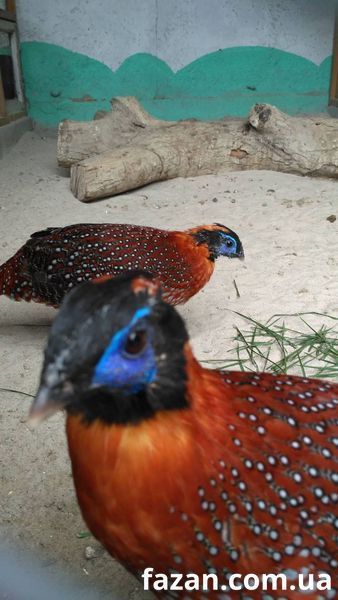
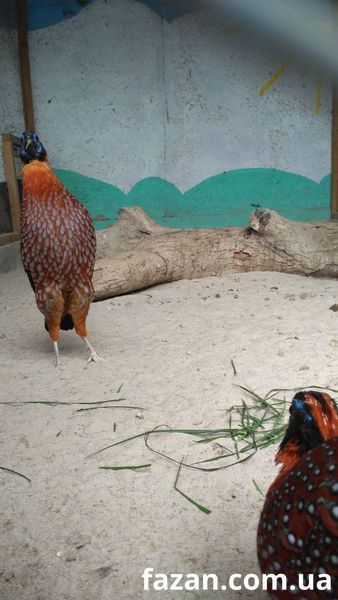
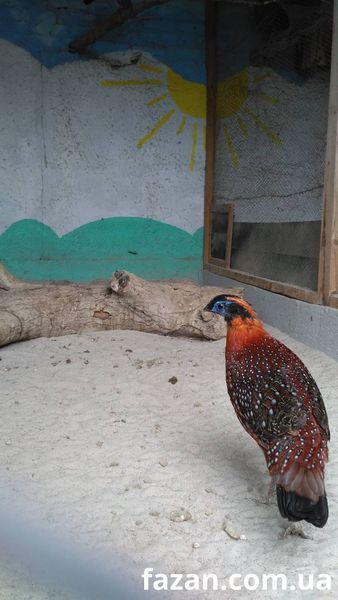
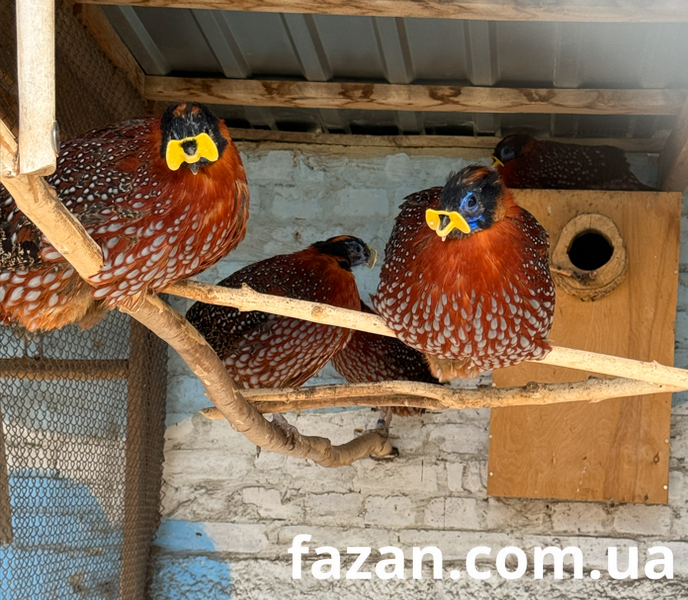
Males reach about 64 cm in length, including 18–23 cm of tail, with a weight of 980–1600 g. Their plumage is vivid: a black head with orange stripes, upper neck with orange spots, and a dark orange-red throat and chest. The back and wings feature white spots outlined in black. During courtship, the male displays an inflatable dark blue “gular sac,” greenish-blue “horns,” and pale blue tassels; the bare skin around the eye is bright blue.
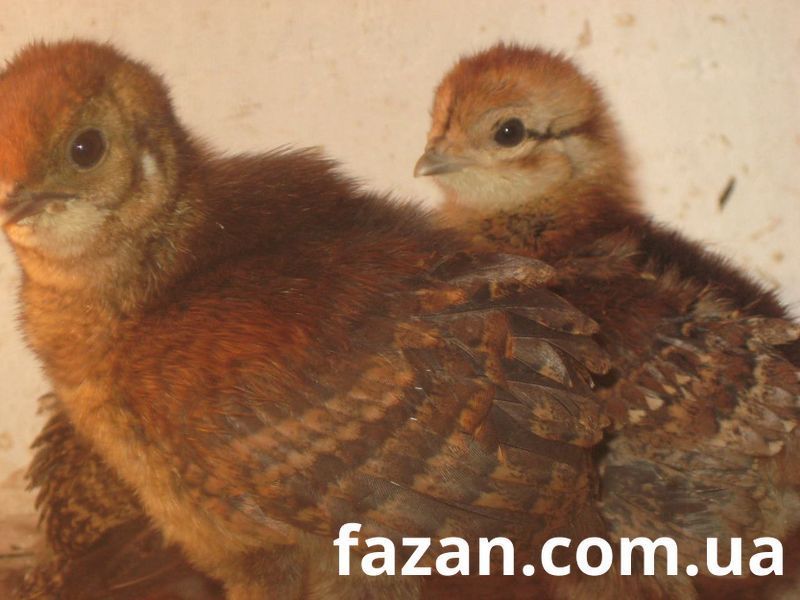
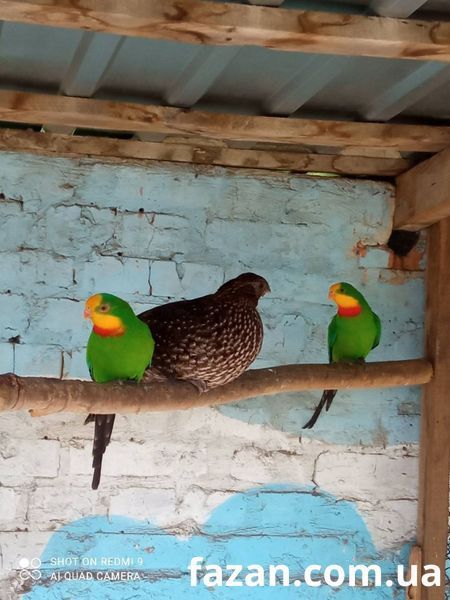
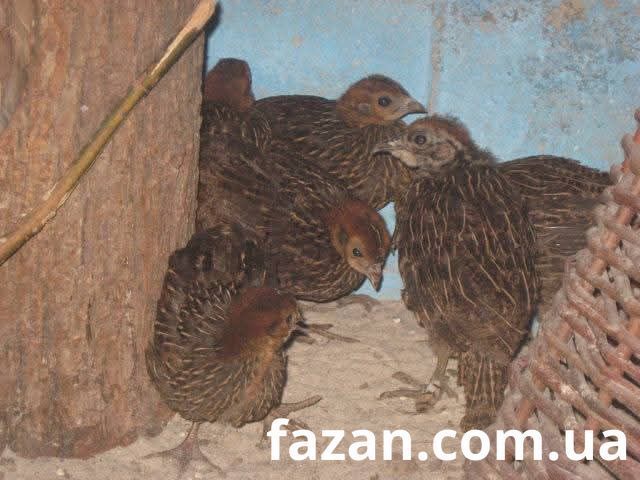
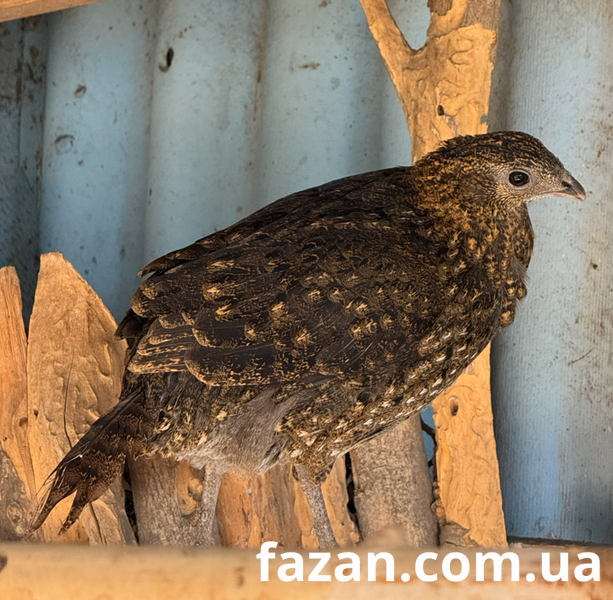
Females are more subdued, predominantly brown with dark spotting and a faintly barred tail. Their pale flesh-colored legs and camouflaged plumage help them remain inconspicuous in dense vegetation.
Distribution
The species ranges from northeastern India (Arunachal Pradesh) west to northern Myanmar and Vietnam, and north to central China. In China, it occurs in Tibet, Yunnan, Sichuan, Guangxi, Guizhou, Gansu, Shaanxi, Hubei, and Hunan. It inhabits high-altitude forests up to 4000 m, favoring bamboo and rhododendron thickets and forested stream valleys rich in ferns.
Behavior and Ecology
Temminck's Tragopan is secretive, spending much of the day in trees and dense vegetation. Usually solitary or in pairs, it has an omnivorous diet, mainly plant-based, including bamboo shoots, buds, leaves, acorns, berries, and seeds. During breeding, insects are also consumed.