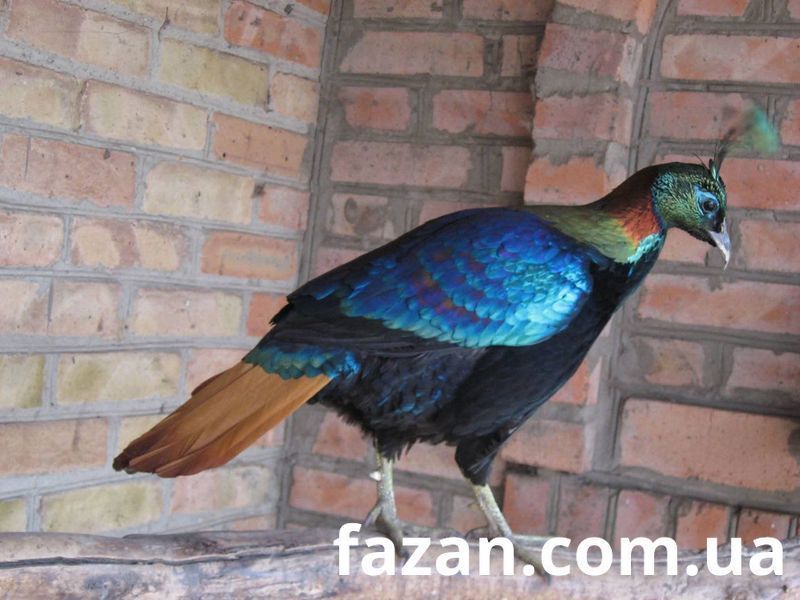
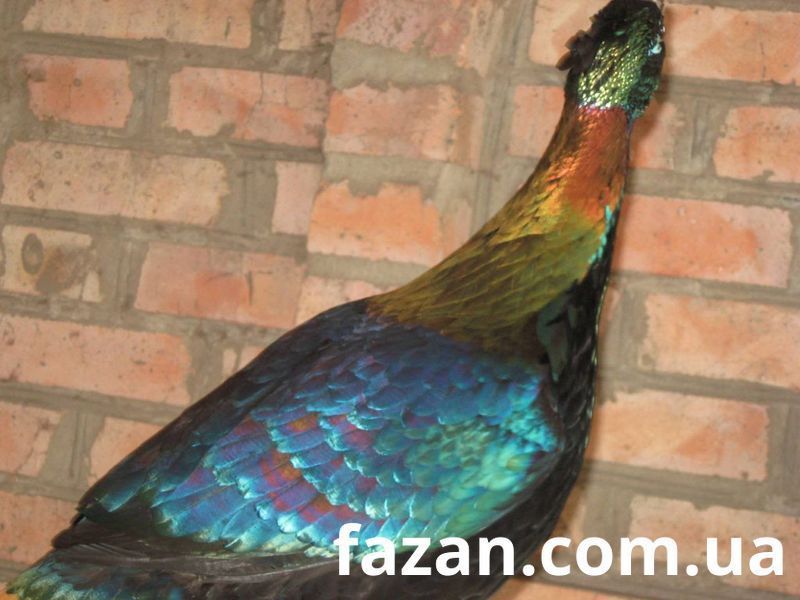
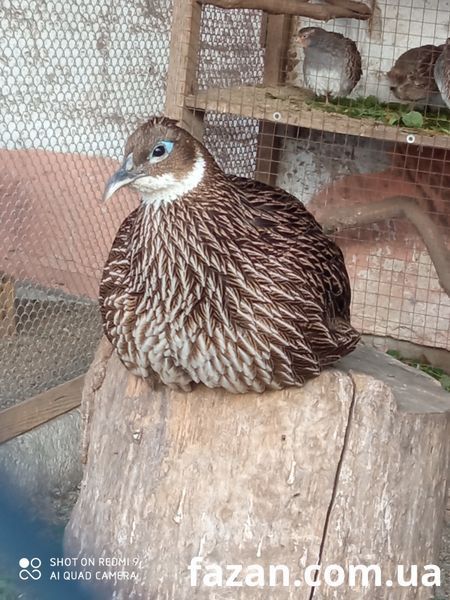
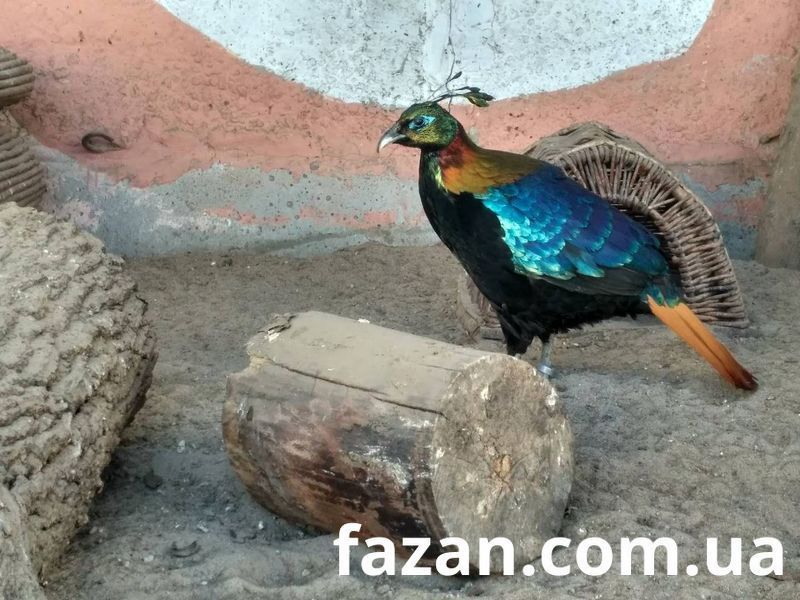
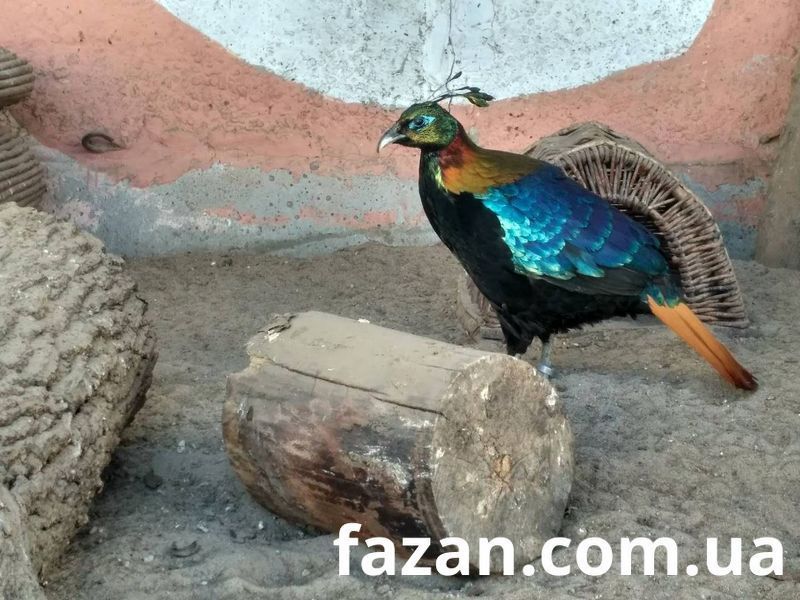
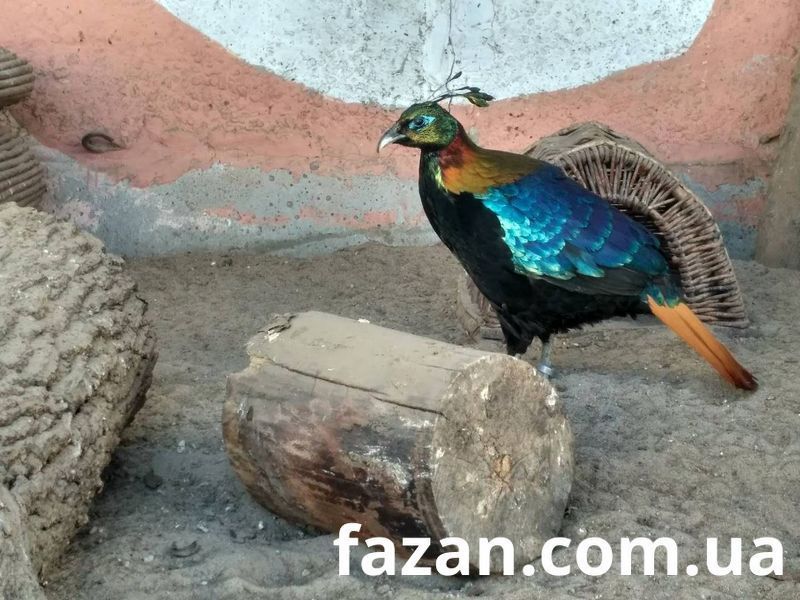
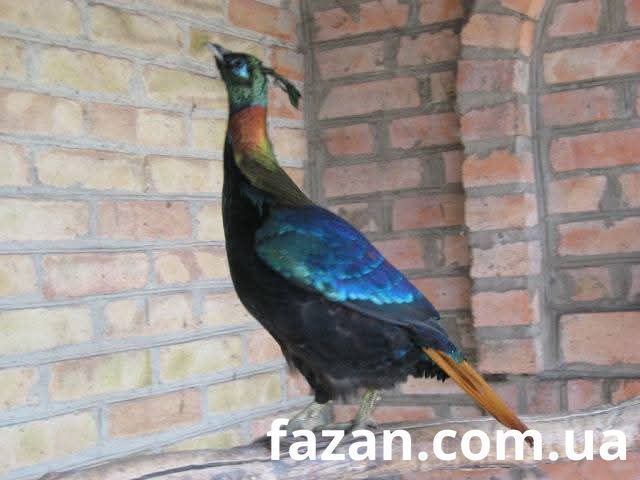
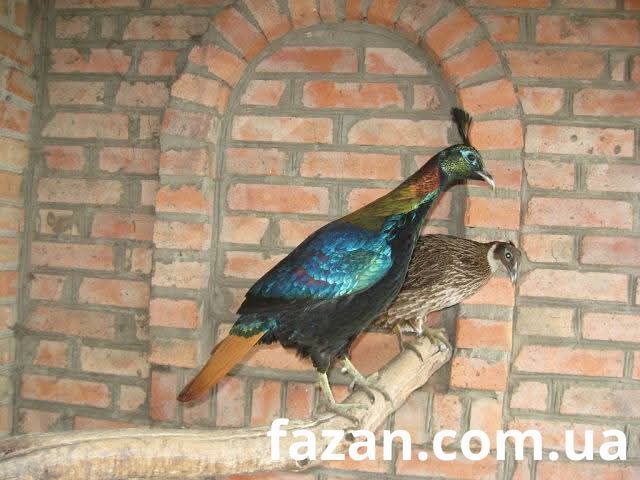
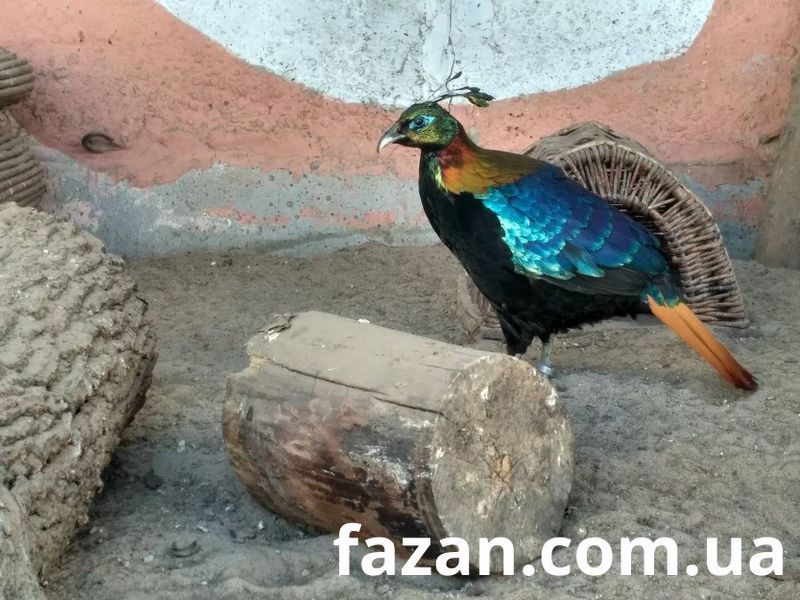
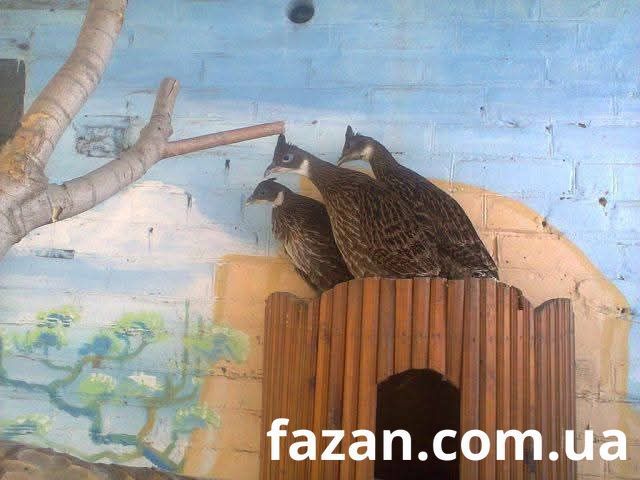
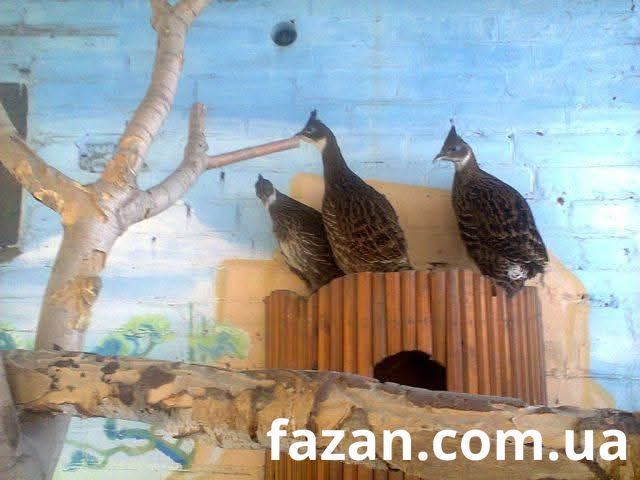
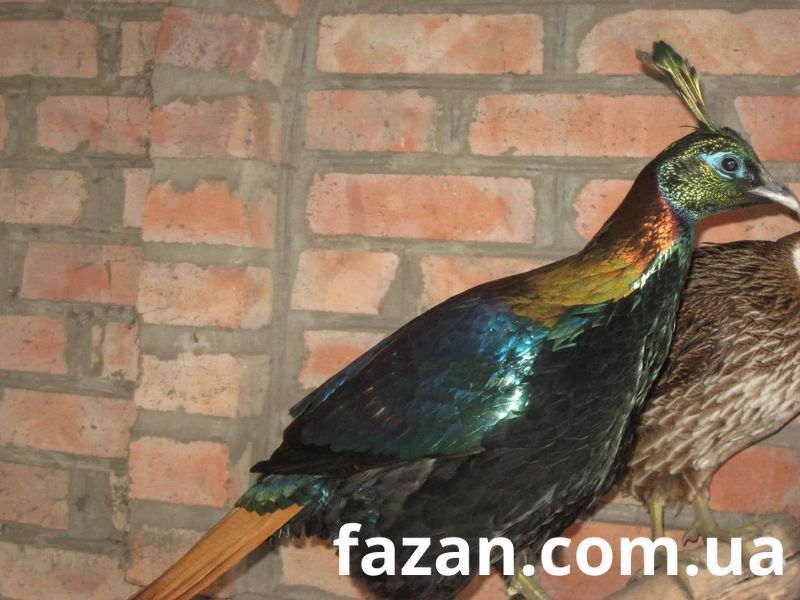
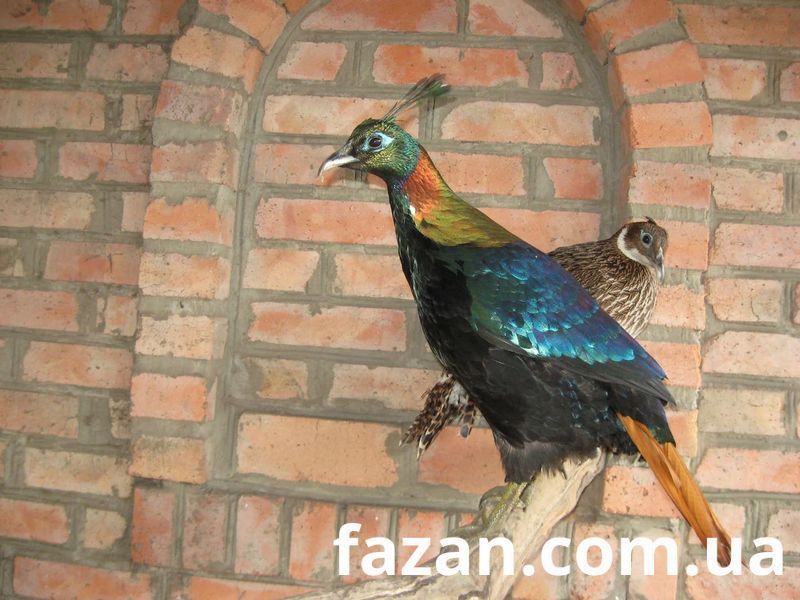
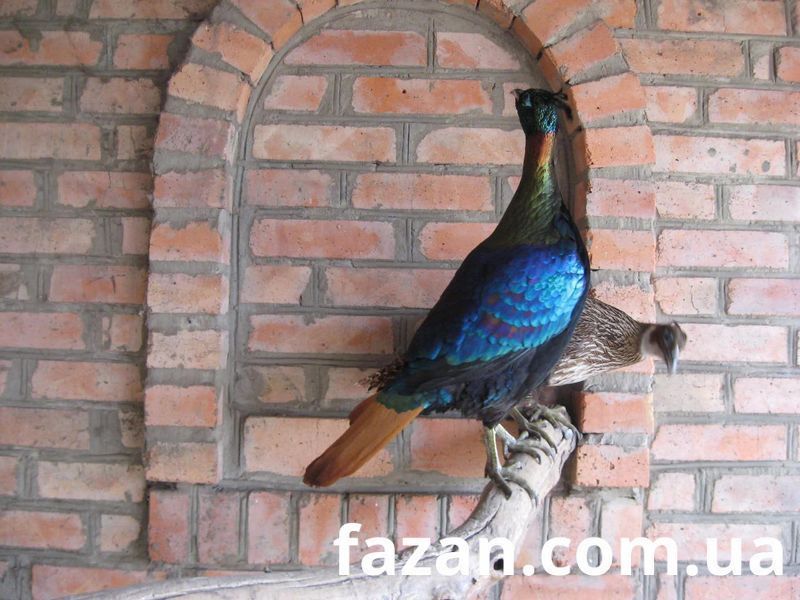
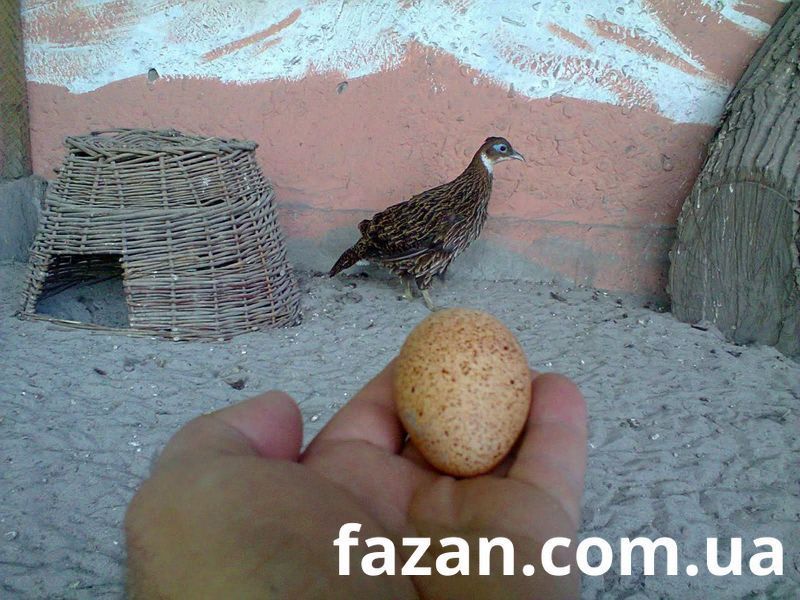
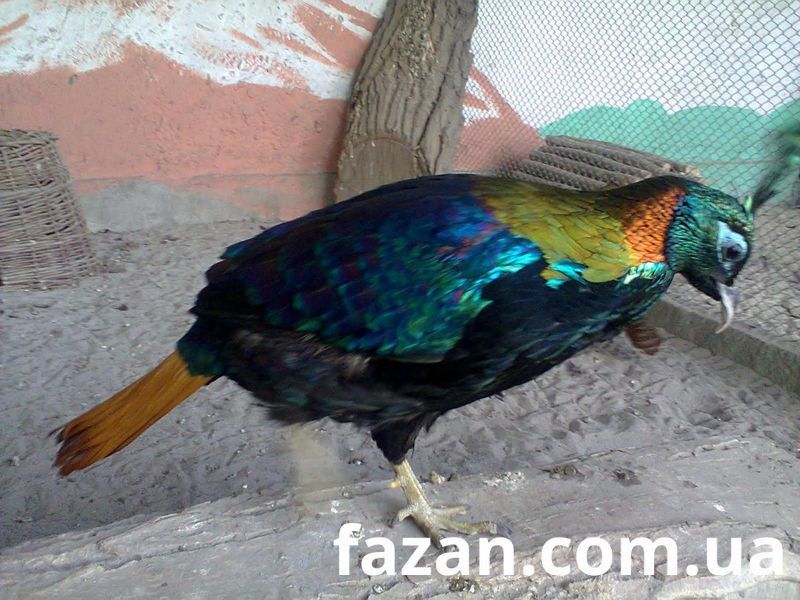
The Himalayan Monal is a robust pheasant with a strong build, short tail, and powerful beak. Males reach about 70 cm in length (tail ~23 cm) and are notable for their iridescent plumage in shades of green, red, purple, and blue, with a white vent, copper-colored tail, and golden crest. Both sexes have a distinctive blue eye ring. Females are smaller and less vividly colored – brown with light stripes and dark cross lines, with a white throat and no crest.
Distribution
This species inhabits mountain forests with oak, pine, and rhododendron, as well as steep grassy slopes of the Himalayas at elevations of 2500–5000 m, from eastern Afghanistan to eastern Bhutan and nearby regions of Tibet. During heavy snow, they descend to lower altitudes.
Behavior
Monals feed on roots, tubers, shoots, acorns, berries, as well as insects and their larvae, which they extract from the ground using their large “shovel-like” beak. They are often found in small single-sex groups of 3–4 individuals; in winter, larger flocks can form in favorable areas.
Reproduction
During the breeding season, males attract females with loud calls and elaborate displays: raising their crest, stretching their neck, strutting proudly, and circling around, sometimes offering a small stone or food. The nest is a shallow depression lined with leaves, moss, and straw. Clutches usually contain 4–6 white eggs with reddish-brown spots; incubation lasts about 27 days.